
How to Choose the Right Wedding Dress for Your Body Type
Let us start with the most important thing we will say in this whole article: there is no body that needs fixing before it deserves a beautiful wedding dress. Every guide like this one is really about a single goal, helping you find the gown that makes you stand taller in the mirror and feel completely, comfortably yourself.
With that settled, silhouette and neckline knowledge genuinely does make shopping easier. Walking into your appointment with a little vocabulary and a rough sense of what tends to flatter your shape turns a sea of white gowns into a manageable, even fun, set of choices. Here is the honest version of the rules, and permission to break every one of them.
How Do You Choose a Wedding Dress for Your Body Type?
Start with silhouette, since it does the most work: A line gowns flatter nearly everyone, mermaid and trumpet styles celebrate curves, ballgowns balance proportions and bring drama, and sheaths suit long lean frames. Then use neckline and fabric to highlight the features you love most. Treat all of it as a starting point, not a rulebook, because the mirror outranks every guideline.
The other secret is trying on more than one silhouette at your first appointment, even ones you think are not for you. Brides surprise themselves in our Winchester fitting rooms every single week.
Silhouettes Explained in Plain English
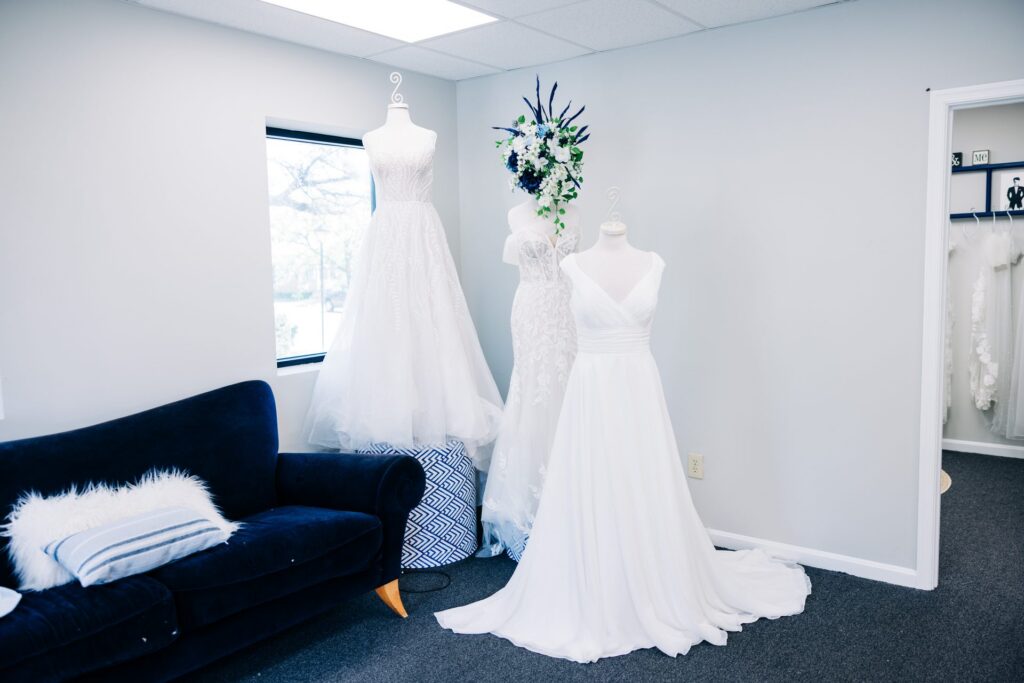
The A line is the universal crowd pleaser: fitted through the bodice, then flaring gently from the waist like its namesake letter. It defines the waist, skims everything below, and works on nearly every figure, which is why it is the most ordered silhouette in America. The ballgown takes that same idea to full volume with a dramatic skirt, wonderful for balancing a fuller bust or hips and unbeatable for classic fairytale formality.
Mermaid and trumpet gowns hug the body and flare near the bottom, with the mermaid flaring below the hip and the trumpet a touch higher. Both celebrate curves rather than hiding them, and they reward confident movers. The sheath and its cousin the slip dress follow the body’s natural line with easy elegance, loveliest on long lean frames and relaxed venues. Fit and flare styles land between sheath and mermaid, offering shape without the dramatic flare.
Necklines and What They Do
Necklines steer the eye. A sweetheart neckline softens and flatters a fuller bust, a V neck lengthens the torso and neck, and the square neckline, everywhere in current collections, adds structure and shows off collarbones beautifully. Off the shoulder styles frame the arms and balance wider hips, while halter and high necklines flatter strong shoulders and athletic frames.
If you love strapless but worry about spending the night tugging, tell your stylist. Modern strapless bodices with internal corsetry stay put through a full night of dancing when they fit properly, and that fit is exactly what alterations perfect. There is also no rule that says one neckline: detachable sleeves and straps let you adjust coverage between ceremony and reception.
Fabric and Structure Do the Heavy Lifting
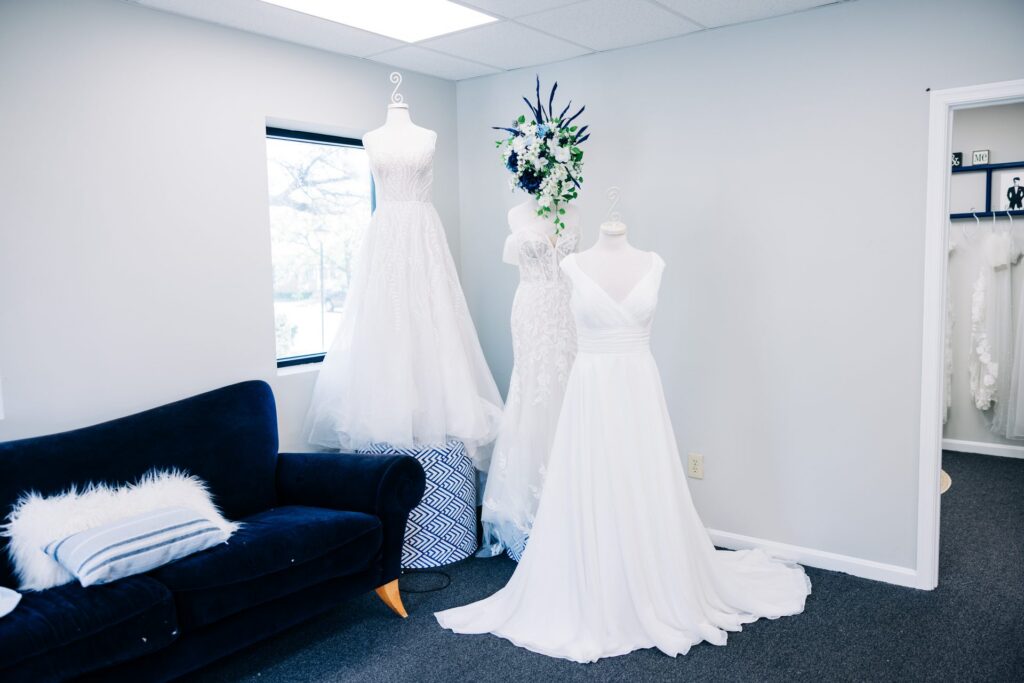
Two gowns in the same silhouette can fit like different species because of fabric. Crepe follows the body closely and shows its lines, mikado and satin hold their own shape and provide structure, and tulle and chiffon float and soften. Ruched fabrics are wonderfully forgiving through the midsection, and heavier fabrics with internal boning quietly do the work of shapewear all night long.
This is why we always say the hanger lies. A structured gown that looks stiff on the rack can feel like armor in the best way, and a slinky crepe that photographs beautifully might feel too revealing in person, or absolutely perfect. You cannot know from photos. Trying gowns on your actual body, with a stylist adjusting and clipping, is the only honest test there is.
Permission to Break Every Rule
Every guideline above is an average, and you are not an average. We have dressed petite brides who owned enormous ballgowns and curvy brides who were breathtaking in minimalist slip dresses. At each appointment, we suggest one wildcard gown outside your stated lane, and a meaningful number of our Winchester brides marry in the wildcard.
One practical note from years of fittings: order for the body you have today, not a goal size. Taking a gown in is simple and routine during alterations 2 to 3 months before the wedding. Letting one out has hard limits. Your dress should meet you where you are, and skilled tailoring will make it fit like it grew there.
Bottom Line
Silhouette first, neckline second, fabric always, and your own reflection as the final judge: that is the whole method for finding a wedding dress that loves your body back. The rules are useful right up until the moment a dress makes you feel radiant, and then they retire. The stylists at The Valley Bride in Winchester fit every shape, every size, and every style of bride, and we would love to help you find the gown that feels like it was always yours. Book an appointment and come see for yourself.
Related reading: How to Prepare for Your First Bridal Appointment, When to Start Wedding Dress Shopping: A Bride’s Timeline


